Understanding the Odds: A Deep Dive into Casino Mathematics
The world of casinos dazzles with flashing lights, ringing slot machines, and the promise of life-changing wins. But beneath the glitz and glamour lies a world of numbers, probabilities, and precise calculations. Every game on the casino floor is governed by mathematical principles that determine your chances of winning—or losing. Grasping the basics of casino mathematics not only demystifies the inner workings of your favorite games, but also empowers you to make smarter decisions, manage expectations, and enjoy your casino experience with eyes wide open.
In this exploration, we’ll unravel the science behind the odds, explain the concept of house edge, highlight how randomness is ensured, and reveal why casinos always seem to come out ahead. Whether you’re a curious newcomer or a seasoned player, understanding these principles will forever change the way you look at casino games.
The Fundamentals: Probability and House Edge in Casino Games
At the heart of every casino game lies probability—the branch of mathematics that deals with the likelihood of different outcomes. Understanding probability is crucial for anyone who wants to decode casino odds.
.png)
Every game, whether it's blackjack, roulette, or slots, has a set number of possible outcomes. The probability of each outcome is calculated by dividing the number of ways that outcome can occur by the total number of possible outcomes.
For instance, consider a standard six-sided die. The chance of rolling a 4 is 1 out of 6, or roughly 16.67%. But when you step onto a casino floor, the math becomes more complex, especially when considering the "house edge."
The house edge is the statistical advantage that the casino has over the player in any given game. It's typically expressed as a percentage and represents the average long-term profit the casino expects to make from each bet. For example, European roulette has a house edge of 2.7%, meaning that for every $100 wagered, the casino expects to keep $2.70 over the long run.
Here are a few notable house edge percentages for common casino games:
- Blackjack (using basic strategy): 0.5%–1% - European Roulette: 2.7% - American Roulette: 5.26% - Baccarat (banker bet): 1.06% - Slot Machines: 2%–15% (varies by machine and casino)This edge ensures that, while individual players can win big in the short term, the casino will always profit over thousands or millions of games—a principle that allows casinos to keep their doors open.
Randomness and Fairness: How Casinos Ensure Unpredictable Outcomes
A core element of casino mathematics is randomness. If games weren’t random, skilled players could exploit patterns and win consistently—something casinos go to great lengths to prevent.
In physical casinos, randomness is achieved through mechanical means: shuffling cards, spinning wheels, or rolling dice. For example, a standard 52-card deck can be shuffled in 8x10^67 possible ways, making it virtually impossible to predict the order of cards. Roulette wheels are carefully balanced and regularly inspected to prevent bias.
In online casinos, randomness is enforced through Random Number Generators (RNGs)—complex algorithms that produce sequences of numbers with no discernible pattern. Independent testing agencies, such as eCOGRA or GLI, audit these systems to guarantee fairness.
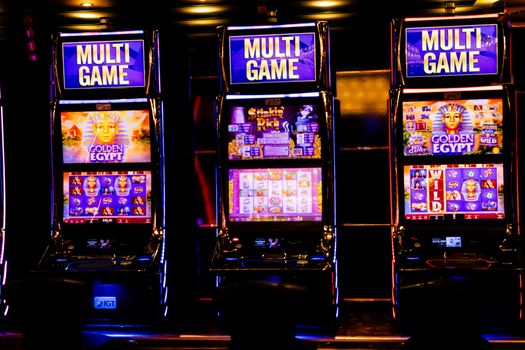
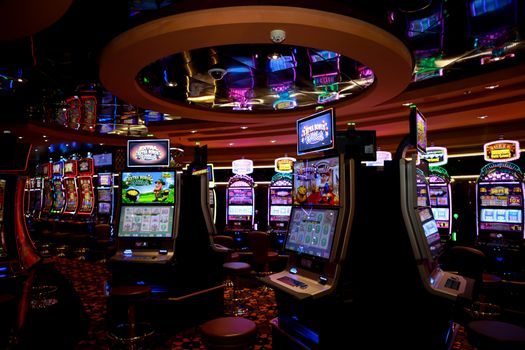
To further illustrate, consider slot machines. Modern slots use RNGs to determine which symbols land on the reels. The odds are programmed so that, while some combinations (like jackpots) are possible, they are exceedingly rare. For instance, a typical three-reel slot with 20 symbols per reel has 8,000 possible combinations. If only one combination wins the jackpot, the odds are 1 in 8,000.
These layers of randomness ensure that outcomes remain unpredictable, maintaining the excitement—and the mathematical certainty of the house edge.
Game Design: How Payouts and Odds Shape Your Experience
Casino games are expertly designed to balance entertainment, the possibility of wins, and the house’s need to profit. A key aspect of this design is the relationship between odds and payouts.
The payout (or "return") is the amount you win if your bet is successful, typically shown as a multiple of your wager. However, the payout is usually set slightly below the true odds of winning, which is how the house edge is baked in.
Let’s compare some popular casino bets to see how this works:
| Game/Bet | True Odds of Winning | Payout Offered | House Edge |
|---|---|---|---|
| European Roulette (single number) | 1 in 37 (2.70%) | 35 to 1 | 2.7% |
| American Roulette (single number) | 1 in 38 (2.63%) | 35 to 1 | 5.26% |
| Blackjack (natural blackjack) | ~4.8% | 3 to 2 | 0.5%–1% |
| Baccarat (banker bet) | 45.86% | 0.95 to 1 (after 5% commission) | 1.06% |
| Slot Machine (jackpot) | Varies (often 1 in 10,000+) | Varies | 2%–15% |
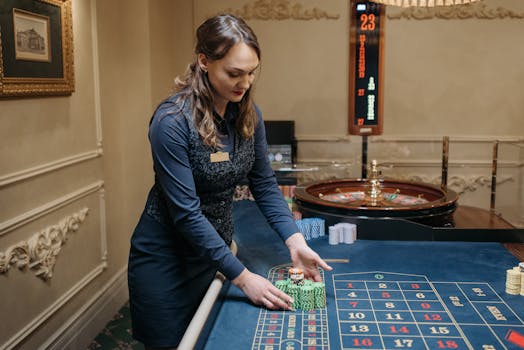
For example, in European roulette, the true odds of hitting a single number are 1 in 37, but the game pays only 35 to 1 if you win. That difference, multiplied over thousands of spins, is what gives the casino its edge.
Game designers tweak payout ratios, bet options, and bonus features to create engaging experiences while retaining their mathematical advantage. Slot machines, for instance, often have many small wins to keep players engaged, while reserving rare, large jackpots to fuel dreams of a big score.
The Law of Large Numbers: Why the Casino Always Wins in the End
Short-term luck is real—anyone can win a big jackpot or hit a lucky streak. But casino mathematics is built on the law of large numbers, a foundational concept in probability theory.
The law of large numbers states that as the number of trials (or bets) increases, the actual results will converge on the expected, mathematical average. In simpler terms, while you might beat the odds in a handful of games, the more you play, the closer your results will align with the house edge.
For example, if you bet $10 on red at a roulette table (with a 48.65% chance of winning in European roulette), you might win several bets in a row. But after hundreds or thousands of spins, the proportion of wins and losses will closely match the probabilities—and the house will retain its statistical advantage.
This principle is why casinos encourage extended play, offering complimentary drinks, loyalty points, and other perks to keep you in the game. The longer you play, the more likely the math will catch up with you.
Comps, Bonuses, and Promotions: The Casino’s Friendly Face of Mathematics
Casinos are masters of psychology as well as mathematics. To keep players engaged, they offer comps (freebies like meals or hotel rooms), bonuses, and loyalty rewards. While these perks are real, they are carefully calculated to ensure the casino remains profitable.
For example, a casino might offer a 10% cashback bonus. If you wager $1,000 over the course of a night and lose $50 (a typical outcome given the house edge), you might get $5 back. The bonus softens the sting of losses, but the casino still comes out ahead.
Online casinos often provide welcome bonuses, such as "100% match up to $200." However, these bonuses come with "wagering requirements," meaning you must bet a certain multiple of the bonus before you can withdraw winnings. For instance, a 20x wagering requirement on a $100 bonus means you must bet $2,000 to unlock the bonus.
Savvy players can use these offers to stretch their bankroll, but the math always favors the house in the long run. Promotions are not acts of generosity—they're strategic tools to increase player retention and, ultimately, casino profits.
Why Understanding Casino Mathematics Empowers Players
Learning the odds and mathematical principles of casino games won’t guarantee you’ll win every time. However, it arms you with knowledge to make informed choices, select games with lower house edges, and approach gambling as a form of entertainment rather than a reliable way to make money.
For instance, choosing blackjack over American roulette dramatically increases your chances of lasting longer and potentially walking away ahead. Understanding how slot machines are programmed can help you manage expectations and avoid common misconceptions, like the idea that a machine is “due” for a win.
Being aware of the law of large numbers helps you recognize when it’s time to walk away, rather than chase losses. And understanding the real value of bonuses and comps can help you enjoy perks without falling into the trap of overextending your play.
In the end, casino mathematics is not the enemy—it's the invisible hand that shapes every game. Recognizing this empowers you to have fun, stay in control, and enjoy the thrill of the casino for what it truly is.